Daughter of the Regiment – Rose Summerell

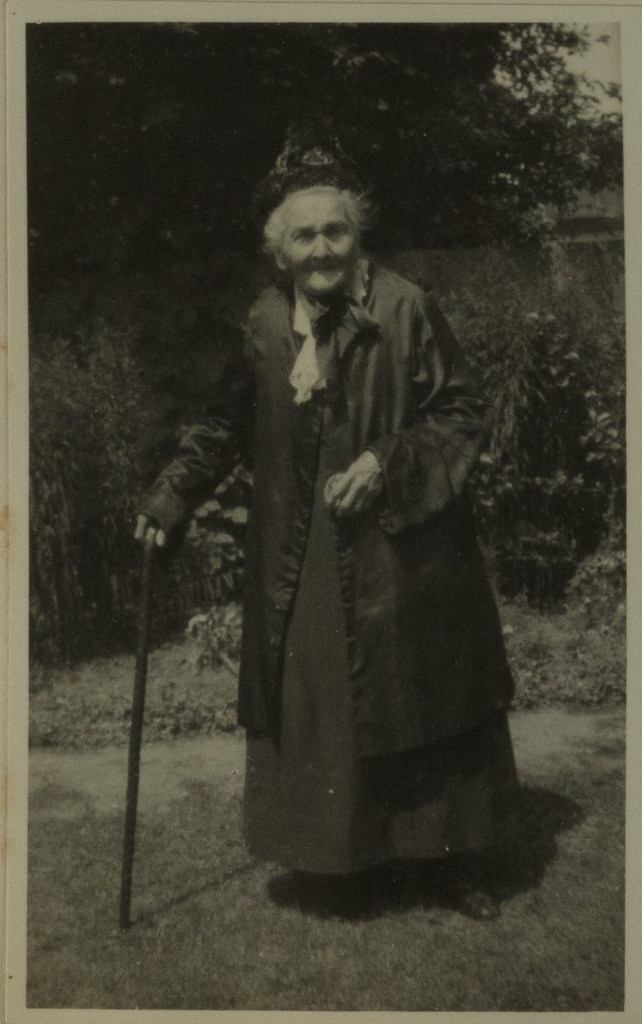
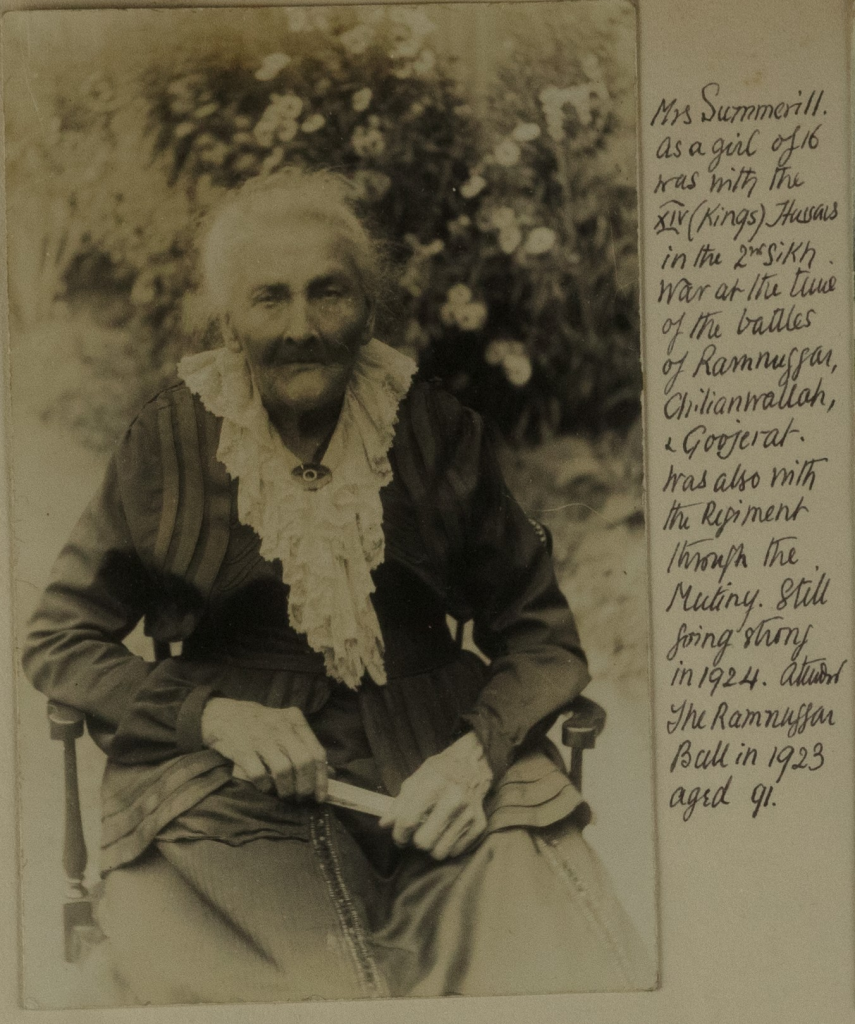
While there are numerous accounts by Victorian soldiers of life on campaign, there is relatively little recorded of the wives and families that so often supported the troops on campaign and shared the hardships. However, recent digitisation and collections work in the museum has brought to light the story of Mrs Rose Summerell, whose childhood and early life was spent in the 14th Light Dragoons, later the 14th Hussars. 
 
In May 1911, aged 76, Rose was interviewed by Lloyd’s Weekly News, one of the first Sunday newspapers, and shared several recollections of her life in India. Her story is a small glimpse into life on campaign, of making lifelong friends and the strong bonds of the Regimental family

1. Rose Summerell from Brig. Browne's Scrapbook

Rosamond ‘Rose Murray was born in Bangalore, India on 14 October 1835, the daughter of Private Charles Philip Murray of the 13th Light Dragoons. When the 13th returned to England in 1840 Charles Murray volunteered to exchange into the 14th Light Dragoons who were just about to leave for India 

For the Victorian soldier while service in India could be tough, it offered certain benefits, and men could often voluntarily transfer to regiments going overseas. As Rose recalled: 

 When I was a child there were no proper quarters for the wives and children; sometimes they had to sleep at one end of the room and the men at the other; they just had to manage somehow. That was why my father exchanged when we came back from India into the 14th so as to go out again; we were much better off in India, for there, of course, we had a little home of our own’.  

In May 1841, the 14th Hussars embarked for India aboard the Repulse, a ship of the East India CompanyAlthough just 5 years old at the time, she could still remember the three-and-a-half-month voyage, but was helped by the diary of the Schoolmaster Serjeant: 

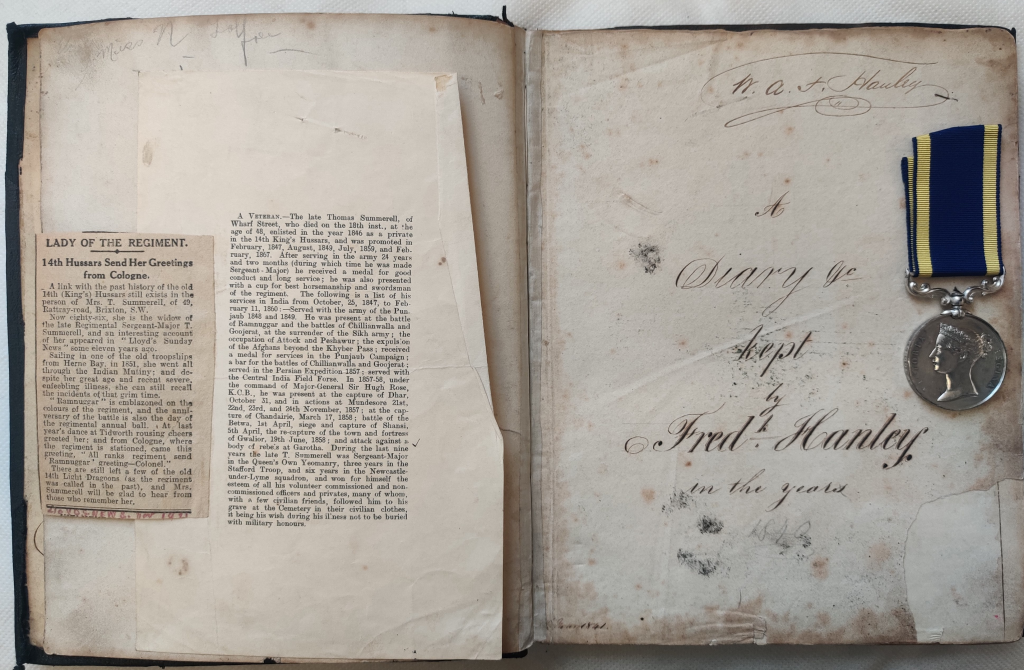
she prefers to call in evidence of the event a time-worn diary kept by the regimental schoolmaster, Mr. Frederick Hanley. Mrs Summerell keeps it as a cherished possession, and almost reverently she takes it from the drawer in which it reposes.’ 

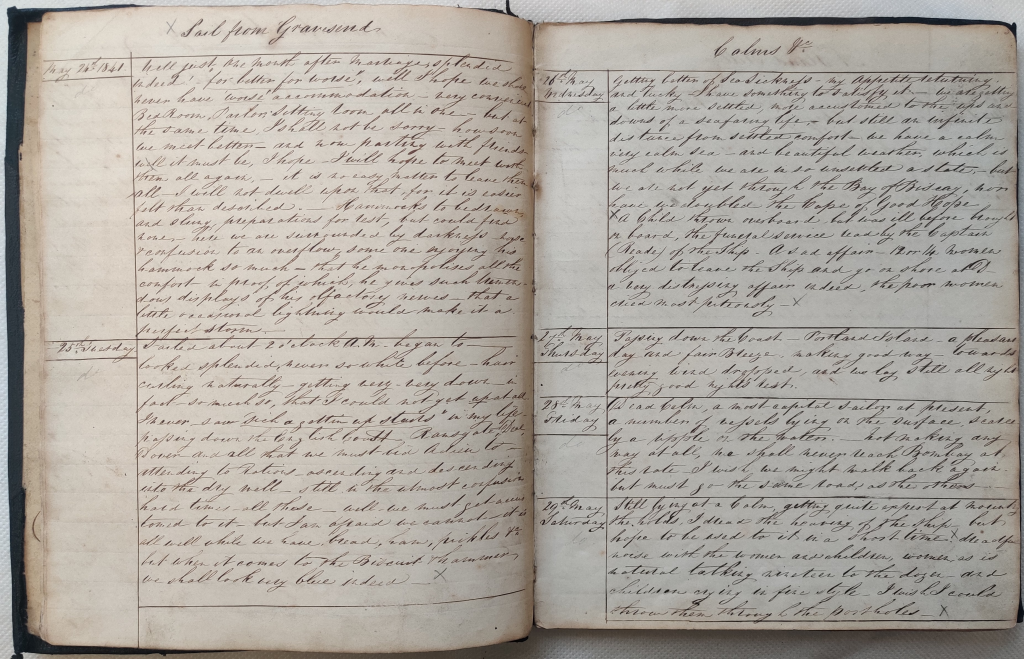
Hanley’s diary offers a small glimpse of the scenes: 

‘May 24, 1841 – Left Canterbury at half past. Some merry fellows amongst us who made much laughter. The band played occasionally: some wet handkerchiefs, for the sake of the girls we left behind us. Arrived at Herne Bay about a quarter to eight o’ clock. Breakfasted at the Head Inn. After some few arrangements embarked on board the steamboat for our new barracks, no more terra firma until we arrive [at] Bombay. The Band playing “The Girl I Left Behind Me.” “Rule Britannia,” and such appropriate tunes as would touch the tender breasts of anyone for at such times one cannot help being affected with the scenes before him.’ 

Rose was clearly a careful custodian of the diary as it survived its travels and is now in the collection at HorsePower, along with Schoolmaster Serjeant Frederick Hanley’s Punjab Medal. She has added her own little touches, inserting newspaper clippings relating to her own life. 

2. Diary of Schoolmaster Serjeant Frederick Hanley & Punjab Medal
3. Extract from the Diary of Schoolmaster Serjeant Frederick Hanley

Rose vividly recalled life in India, speaking of long marches, fording rivers, and sharing the hardships of the men. During the Second Anglo-Sikh War (1848-1849) the families and baggage were left at a fort in Lahore, and here they spent many hours eager for any news after battles such as Ramnuggur. During the Indian Mutiny in 1857 she remembered sleeping with a bundle of clothing in case they had to escape to safety.

Rose Murray married Sergeant Thomas Summerell of the 14th Light Dragoons at Meerut, on 19 November 1851, aged just 16. She remembered ‘as we came out of church we were carried to quarters in palanquins. We had a palanquin each, for there was not room for us both in the same one’.

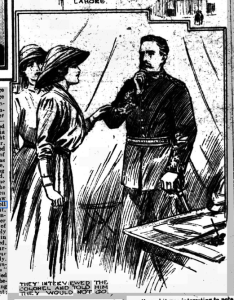
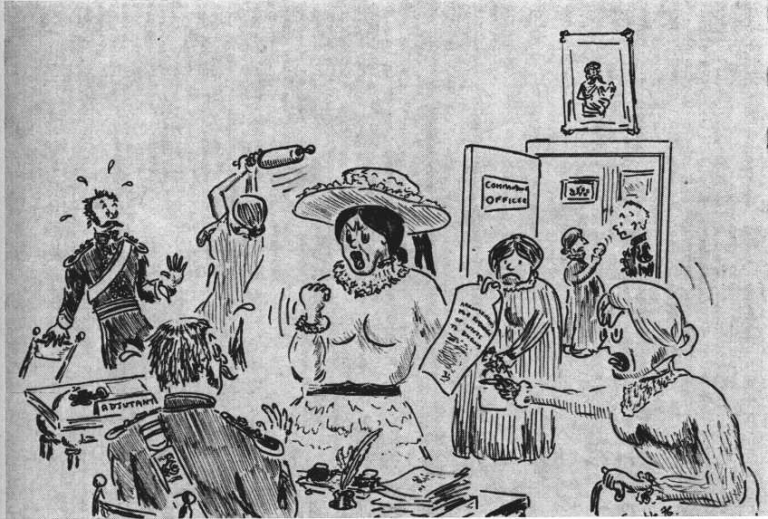
One of her most entertaining recollections is from the Lloyds Weekly News, who interviewed Rose in May 1911. She spoke of ‘fierce’ confrontation between the regimental wives and the Commanding Officer, and although reported to have taken place on the eve of the Indian Mutiny it is more likely to have been a few years earlier. At the time, the Commanding Officer was Lt Col Henry Edward Doherty CB, who had commanded the 14th since 1850. At the Battle of Ramnuggur, after Colonel Havelock was mortally wounded, Doherty led the three squadrons of 14th Dragoons out of the Sikh entrenchments to safety. From the interview, Lloyds reported:

‘ “Our Regiment” – and it was interesting to note the personal touch whenever she referred to her husband’s regiment – “came down to Meerut when we left Lahore…. We were really on our way back to England, and the women and the children were actually on the ‘bum-boats’ ready to be taken on board the troopship. Then we heard that our men had been sent back to Meerut, and we all refused to go to England. Colonel Doherty, who was the commanding officer, had all the married men of the regiment paraded, and he told them it was their duty to make their wives obey orders and that they must go back to England. The men, of course, listened in silence and then went to cantonment and told their wives… One or two [of the wives] were appointed to speak for the rest, and they interviewed Colonel Doherty. They told him that they knew trouble was brewing that if they went home to England they would not see their husbands for six or seven years, and they set him at defiance.  

In despair the poor distracted colonel telegraphed to the Commander-in-Chief, who was in Calcutta at that time, and asked for instructions. In reply he got a telegram authorising the women to remain, so we won the day.” ‘ 

Colonel Doherty may have displayed great bravery at Ramnuggur but was no match for the power of the ‘Wives Club’. The scene was pictured in the Lloyds weekly News article and re-imagined in The Hawk Journal of 1976. 

4. Cartoon from The Lloyds Weekly News, May 1911 Edition
5. Cartoon from The Hawk, April 1976
6
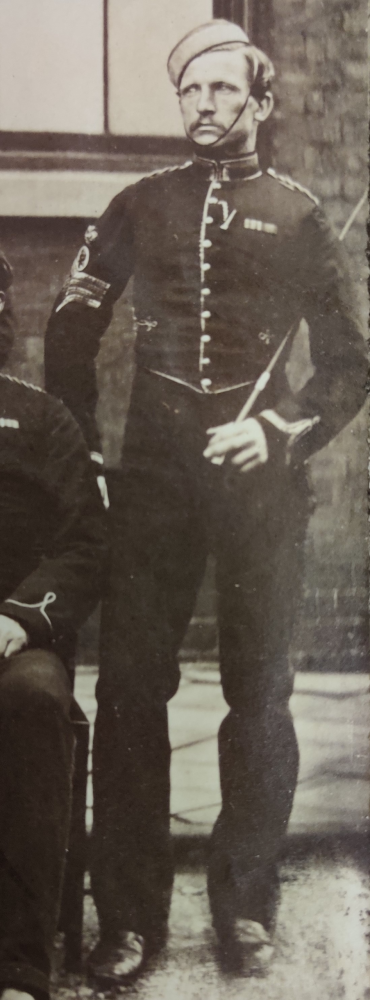
6. TSM Thomas Summerell

Thomas Summerell was promoted to Regimental Sergeant Major in 1867, leaving the Army three years later. The family then lived in Stafford where he joined the Queen’s Own Yeomanry. Sadly, he died in 1878, aged just 48. The Staffordshire Advertiser reported: 

‘[Thomas Summerell served] Three years in the Stafford Troop and six years in the Newcastle-under-Lyme squadron and won for himself the esteem of all his volunteer commissioned and non-commissioned officers and privates, many of whom, with a few civilian friends, followed him to his grave at the Cemetery in their civilian clothes, it being his wish during his illness not to be buried with military honours’ (Staffordshire Advertiser, 28 December 1878).  

Alongside her husband’s three campaign medals Rose Summerell kept a memento from her own service in the regimental school! This was a small medal which was ‘presented to Mrs Summerell when she was a little schoolgirl in India by one of whom she still speaks as “Colonel Havelock, the brother of the great hero, General Havelock”. The medal bears her name on the edge, and is inscribed “For Merit” having been given to little Rose Murray for good conduct at school.’ 

Unfortunately, none of these medals are held by the Museum, but a recently discovered photograph album from 1862, passed down through the Tilney family, has provided a previously unknown photograph of Thomas Summerell. 

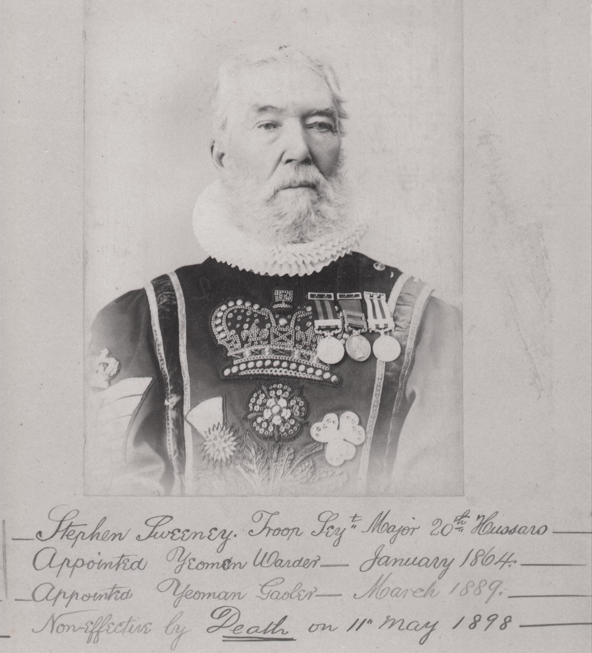
After her husband’s death Rose moved to London with her children. She often mentioned one of their Regimental friends, Stephen Sweeney, a formidable old soldier. Born in 1818, Sweeney enlisted into the 14th in 1837 and served in the Anglo-Sikh Wars, Persia, and the Indian Mutiny. 

Sweeney is also an interesting character; in 1859 he transferred to the 2nd Bengal European Light Cavalry and was one of the volunteers who stayed on as the regiment became the 20th Light Dragoons, before being retitled as Hussars. He was therefore one of the first soldiers to serve in both the 14th and 20th Hussars! 

Retiring after 25 years’ service, in 1864 he was appointed Yeoman Warder at the Tower of London. Several years later he was appointed a Yeoman GaolerSweeney died in 1898, aged 80, but in the years before his death he had shared ‘many long yarns of his soldiering days’ with Colonel Henry Blackburne Hamilton who was compiling his Historical Record of the 14th Hussars, which was published in 1900. 
Also at the Tower was another regimental veteran and Rose described how ‘we three used to meet once a year on the anniversary of the day on which our regiment left Canterbury, just to talk over old affairs and old friends. But they are both dead now, and I believe I am the only survivor of the ten or eleven hundred who went out in the Repulse in 1841.’ 

When Rose was interviewed by Lloyd’s she was still living in Brixton Hill, London, although sadly six of her seven children had died. As a result of the newspaper article, she received several letters from old friends, but the greatest pleasure was one from the 14th Hussars stationed in Bangalore. 
 
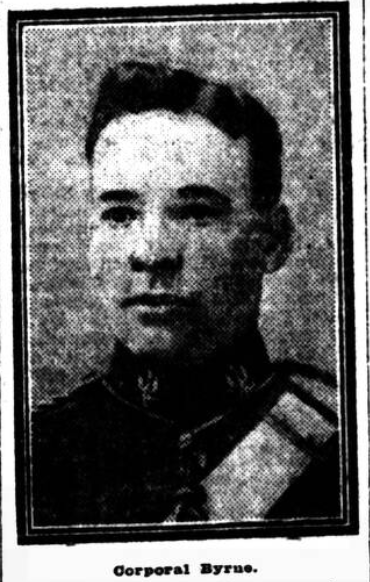
Members of the Royal Army Temperance Association within the regiment agreed to gift Mrs Summerell a pension of £1 a month during her lifetime, dubbing her ‘the daughter of the regiment’. A Corporal Byrne forwarded a postal order for the first pound to Lloyd’s offices who visited her to deliver the news: 

‘It was pathetic to see Mrs Summerell’s pleasure when the letter with this great news was handed to her. Her eyes filled with tears and she had some difficulty in expressing her feelings ’So very, very kind and thoughtful of them… it will make a lot of difference. A pound a month will mean so many little comforts.’ 

‘Bangalore, that is where I was born you know. Corporal Byrne, I don’t know the name at all; but then how would I? It is so many years since I left India.’ 

7. Yeoman Gaoler Stephen Sweeney. (With thanks to David Coleman, Archivist of the Yeoman Warders)
8. Corporal Byrne
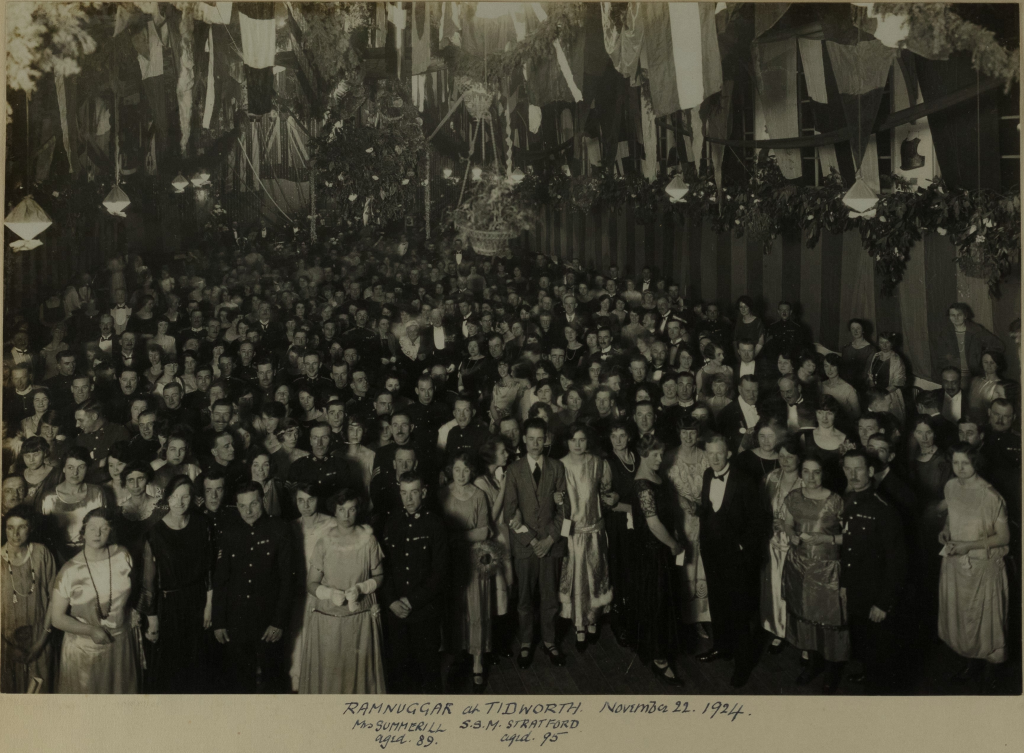
9. Ramnuggur Ball, 1924. Rose Summerell and John Stratford can be seen in the centre

As a result of this connection, she was invited to several Ramnuggur Balls and other regimental dinners. In 1924 she attended the Ramnuggur Ball alongside Troop Sergeant Major John Stratford, the last survivor of the battle. 

After a very eventful life Rose Summerell died on 31 January 1928 and is buried at West Norwood Cemetery, one of London’s ‘Magnificent Seven’ Cemeteries. 

10. Rose Summerell